Core Rules Questions
Q: What causes a showdown?
Showdowns occur when a battlefield becomes contested. Moving to an open battlefield does count as contesting the battlefield. During showdowns the ability to take game actions passes between players.
If you play a unit to a battlefield you already control, that does not start a showdown.
If a new showdown would occur while one is already in progress, that showdown is staged and will occur once the current showdown concludes.
Q: What causes a chain?
A chain occurs when a player uses an activated ability, triggers an ability, or plays a spell. An opponent can use Reactions (see below) to react to things on the chain before they resolve.
When a player plays a unit, it does not create a reaction window on its own.
If playing a unit triggers an ability of itself or another card, that ability will cause a chain and can be reacted to.
Q: When can I play a spell or ability?
It depends on the type of spell or ability:
- Reactions can be played anytime you have priority on your turn or the opponent’s turn, even in “reaction” to another spell or ability that is on the chain.
- Actions can’t be used to react to things, but they can be played during your turn or during any showdown when you have focus and nothing else is on the chain.
- Spells or abilities that do not have Action or Reaction can only be played on your turn when nothing else is going on. They can’t be used during a showdown or if anything is on the chain.
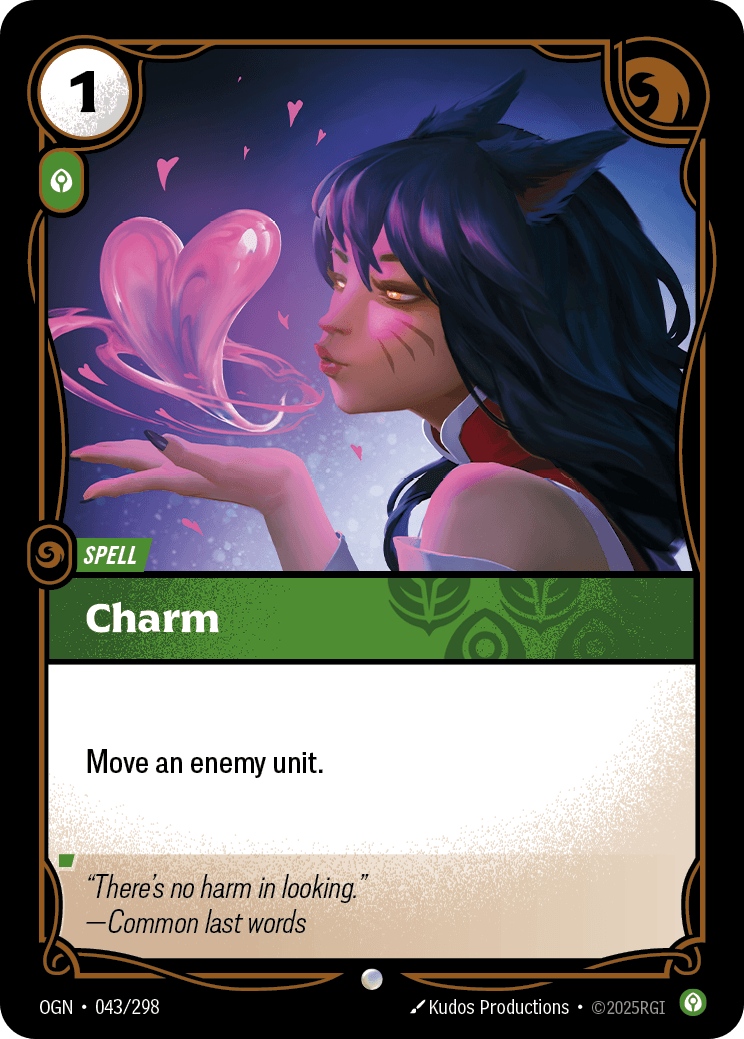
Q: Can I use a spell like Charm or Ride the Wind to move a unit from one battlefield to another battlefield?
Yes! Normally a unit can’t move from battlefield to battlefield unless it has ganking, but spells that say “Move a unit” allow you to break the normal movement rules regardless of abilities they have.
Q: When am I the attacker or the defender?
You are the attacker when a unit you control moves to contest a battlefield an opponent controls.
You are the defender when a unit you don’t control moves to contest a battlefield you control.
A unit you control moving to an open battlefield does not make you an attacker and so it does not cause attack triggers to happen.
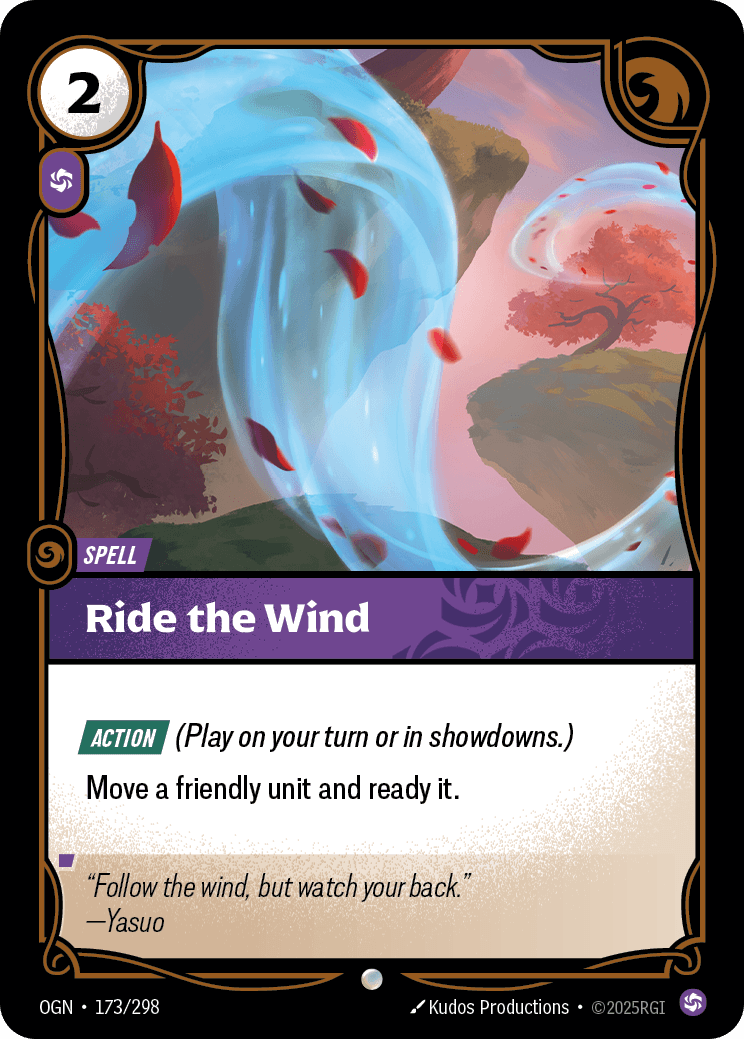
If a unit you control moves to an open battlefield, and an opponent uses a card like Ride the Wind to bring a unit they control to that battlefield, a new combat will start after this showdown ends. In this new combat, you’ll be the attacker and the opponent will be the defender, and any attack/defense triggers will happen when that combat starts. (The player whose units first contest a battlefield is always the attacker in surprise defense situations like this one.)
Q: Can I score on my opponent's turn?
Yes! For example, you can use cards like Ride the Wind to conquer a battlefield and score on an opponent’s turn.
Q: How do I score the winning point?
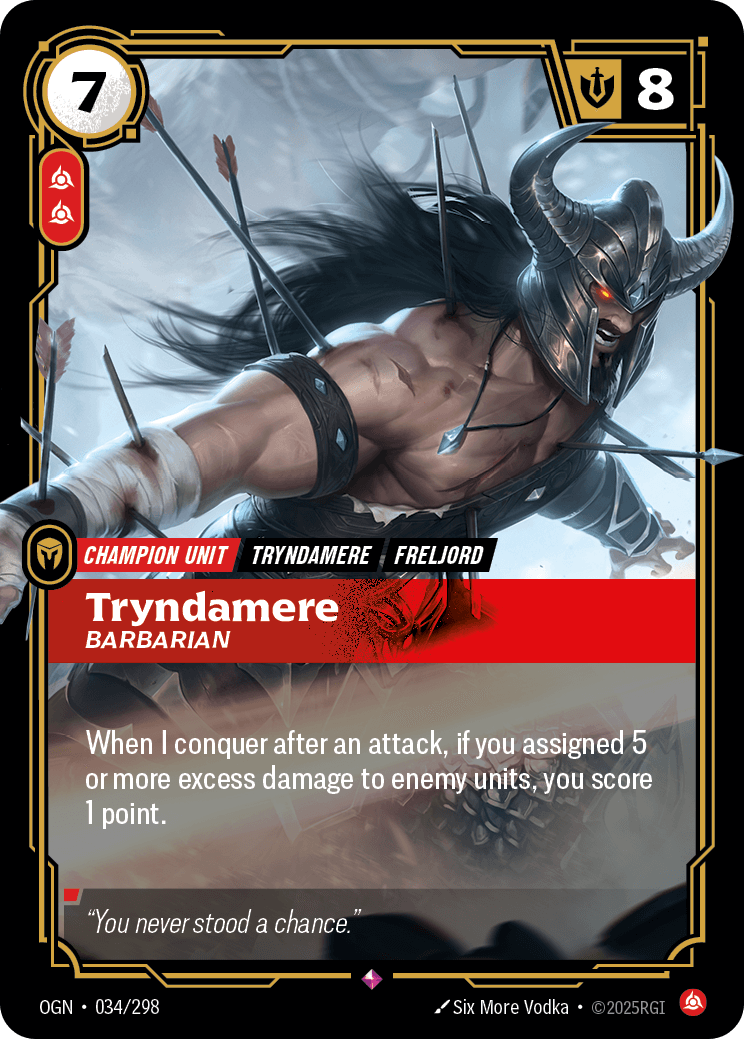
Like other points, you can score the winning point by holding a battlefield or through extra point abilities on cards like Tryndamere, Barbarian.
To score the winning point through conquering a battlefield, you must have already scored the other battlefields this turn. If you would score the winning point from conquering a battlefield but haven’t scored the other battlefields yet this turn, you draw 1 card instead.
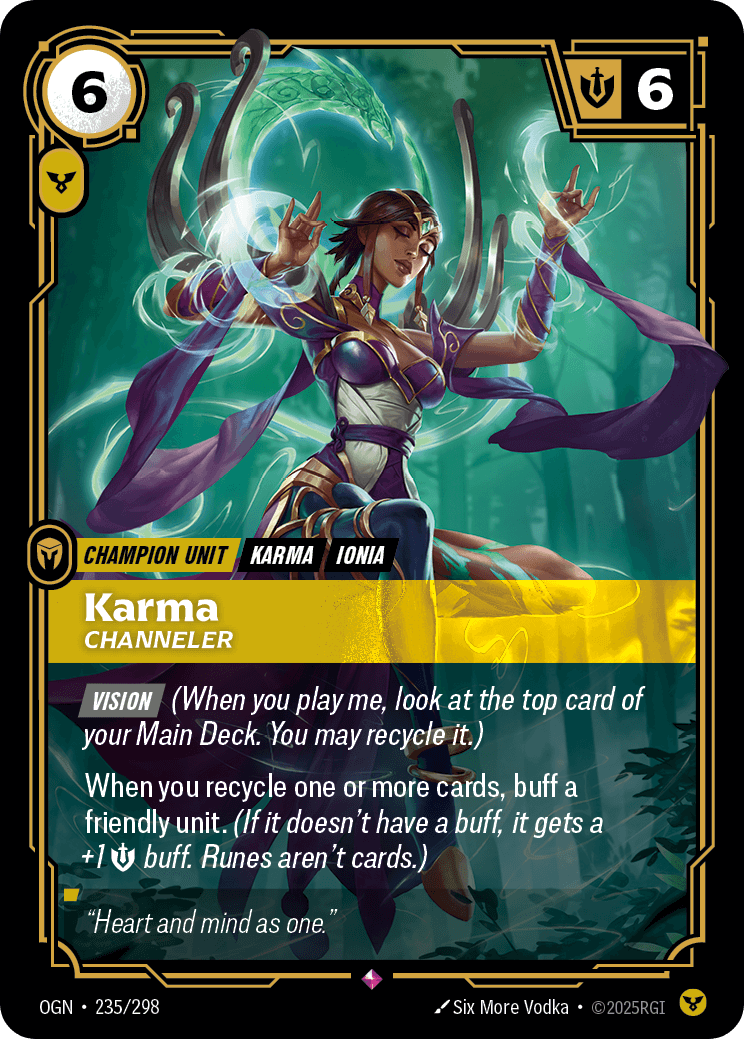
Q: Do runes count as cards for effects like Karma, Channeler?
Runes do not count as cards for gameplay mechanics like Karma as “card” in rules text is shorthand for “Main Deck card”. If you recycle a rune, it will not cause Karma to trigger.
Q: How does Hidden work?
Cards with the hidden mechanic can be played in two ways:
- You can play them from your hand as you normally would any other card of their type and timing, paying their full cost listed in the top left hand corner of the card.
- You can hide them at a battlefield you control by recycling any rune. If you hide a card, the following is true:
- You can play the card on a later turn for free as a Reaction.
- When playing a hidden card from facedown, any choices you make for the card when you play it can only choose things at the battlefield where you hid it. For example, if you hide Hidden Blade you can only use it only to kill things at the battlefield you hid it at.
- If you lose control of the battlefield where you hid the card, it goes to your trash.
- You can’t hide cards that don’t have the Hidden keyword.

Q: How do reflexive triggers work?
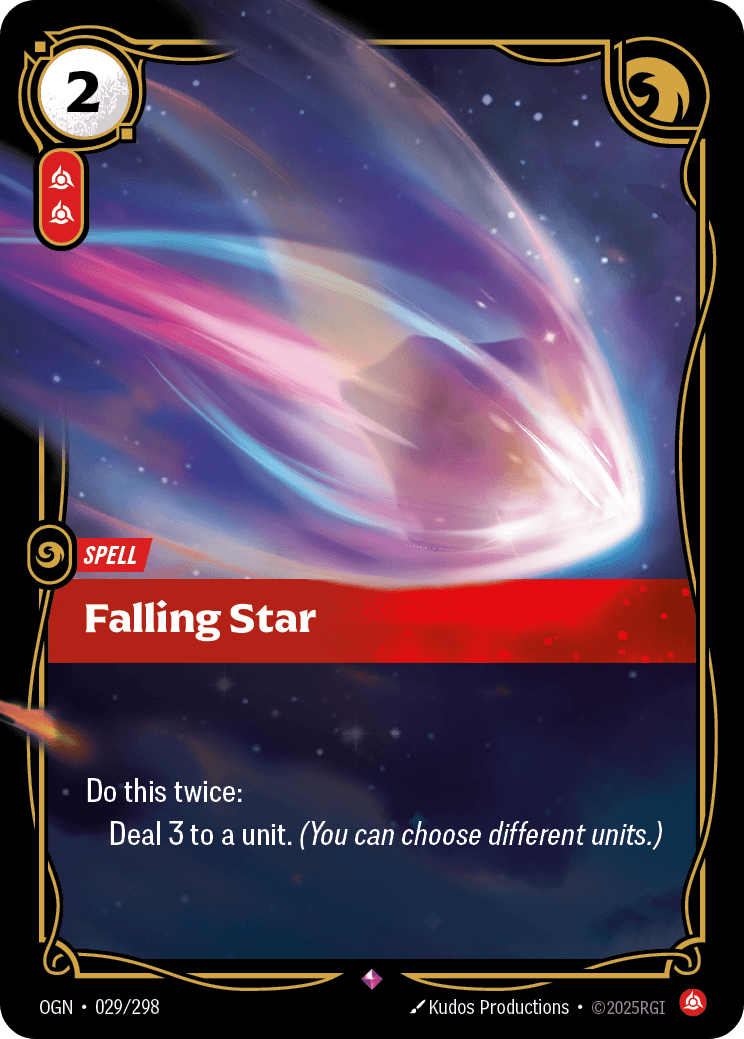
When a card says “Do this:”, it will create one or more new triggers to go on the chain. For example, when you play a Falling Star you do not choose units for it as you would with a card like Hextech Ray. Once Falling Star resolves, it will create two new triggers on the chain that you must choose units for simultaneously, and resolve individually.